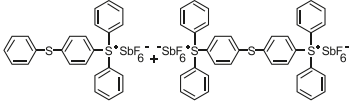
Mixed type triarylsulfonium hexafluoro antimonate salts(CAS#71449-78-0)
| Risk Codes | R20/22 – Harmful by inhalation and if swallowed. R51/53 – Toxic to aquatic organisms, may cause long-term adverse effects in the aquatic environment. |
| Safety Description | S26 – In case of contact with eyes, rinse immediately with plenty of water and seek medical advice. S36/37/39 – Wear suitable protective clothing, gloves and eye/face protection. |
| UN IDs | 1549 |
| Hazard Class | 8 |
| Packing Group | III |
Introduction
Diphenyl[4-(phenylthio)phenyl]-hexafluoroantimonate sulfonium (referred to as sulfonium) is an organoantimony compound. Here’s some info about its properties, uses, preparation, and safety:Properties:Sulfonium is a solid that looks like white to pale yellow crystals. It’s pretty stable both chemically and thermally. At room temperature, it can dissolve in organic solvents like ethanol and dimethylformamide, but it’s almost insoluble in water.Uses:Sulfonium has lots of applications. One main use is as a catalyst in organic synthesis. It can help make C-C and C-X bonds, like carbon-carbon, carbon-oxygen, and carbon-sulfur bonds. It can also be used in organometallic chemistry, catalytic oxidation reactions, and even in making fluorescent probes and hybrid materials.Preparation:There are several ways to make sulfonium. The most common method is reacting thio-substituted aromatic aldehydes with chlorobromobenzene to get thioarylphenyl iodides, which then react with hexafluoroantimony compounds to form sulfonium.Safety Info:It can be toxic, both acutely and chronically. When handling sulfonium, avoid skin contact, inhaling fumes or dust, and swallowing it. Always use proper personal protective gear, like chemical goggles, gloves, and lab coats.It’s important to work with sulfonium in a safe lab environment and follow all lab safety rules and operating instructions.