
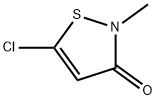
5-Chloro-2-methyl-4-isothiazolin-3-one (CMI)(CAS#26172-55-4)
1. Properties:
- Appearance and Physical Form: 5‑Chloro‑2‑methyl‑4‑isothiazolin‑3‑one is generally supplied as a clear to yellowish liquid. It is most commonly available as a 14% active, aqueous solution in a 3:1 ratio with its counterpart, 2‑Methyl‑4‑isothiazolin‑3‑one (MIT), which is often the final market-ready formulation.
- Solubility: CMI exhibits excellent water miscibility and is soluble in a wide range of polar organic solvents, making it highly versatile for aqueous and emulsion-based systems.
- Chemical Properties: As a non‑oxidizing, isothiazolinone‑derived biocide, CMI’s mechanism of action involves disrupting the bond between proteins in bacteria and algae, effectively penetrating biofilms to exert a biological stripping action. It is broad‑spectrum, effective against gram‑positive and gram‑negative bacteria, yeast, and fungi, and is effective across a pH range of 2.0 to 9.0. However, it can be deactivated in the presence of strong nucleophiles (like amines and thiols) or in highly alkaline conditions above pH 9.
2. Applications:
- Water Treatment: CMI is extensively used as a broad‑spectrum bactericide and algaecide in industrial circulating cooling water systems, petrochemical plants, power stations, central air conditioning units, and paper mill wastewater treatment.
- Oilfield Chemicals: Functions as a highly effective biocide for oilfield injection water and fracturing fluids to control sulfate‑reducing bacteria (SRB) and prevent reservoir souring.
- Paints, Coatings & Polymer Emulsions: It serves as a highly efficient in‑can preservative for water‑based paints, latex, polymer synthetic emulsions, pigment dispersions, and adhesives to prevent bacterial and fungal spoilage during storage.
- Cosmetics & Personal Care: CMI is used as a preservative in rinse‑off cosmetic products including shampoos, liquid soaps, and conditioners, typically in a 3:1 ratio with MIT at low use levels.
- Metalworking Fluids (MWF): It is utilized to preserve metalworking fluids and hydraulic fluids, extending fluid life by controlling microbial growth.
- Paper & Pulp: Used as a slimicide in paper production to control slime‑forming bacteria and protect finished paper products from mold and mildew.
- Additional Applications: CMI is also formulated into textile auxiliaries, leather processing baths, and detergent products as a biocide and preservative.
3. Preparation Method:
- Chemical Synthesis: 5‑Chloro‑2‑methyl‑4‑isothiazolin‑3‑one is synthesized via the cyclization and subsequent chlorination of an amide precursor derived from acrylic acid derivatives. The reaction typically involves starting materials like methylamine and dimethyl maleate or similar maleamic acid esters. Final product is formed through intramolecular cyclization and oxidation/halogenation steps.
4. Safety Information:
- Hazard Classification: CMI is classified as corrosive and sensitizing. Key hazard codes include R23/24/25 (Toxic by inhalation, in contact with skin, and if swallowed), R34 (Causes burns), R43 (May cause sensitization by skin contact), and R50/53 (Very toxic to aquatic life, may cause long-term adverse effects).
- Personal Protection: Appropriate personal protective equipment (PPE) including chemical‑resistant gloves, goggles, and protective clothing is mandatory. Avoid prolonged contact with skin and eyes. In case of accidental contact, rinse immediately with plenty of water.
- Storage & Stability: Store at room temperature in a dark, cool, and well‑ventilated area. Avoid contact with reducible metals such as iron and aluminum, which can lead to decomposition. CMI is stable under normal storage conditions but should not be mixed with strong nucleophilic chemicals or highly alkaline media (pH > 9.0) to avoid degradation.
Write your message here and send it to us