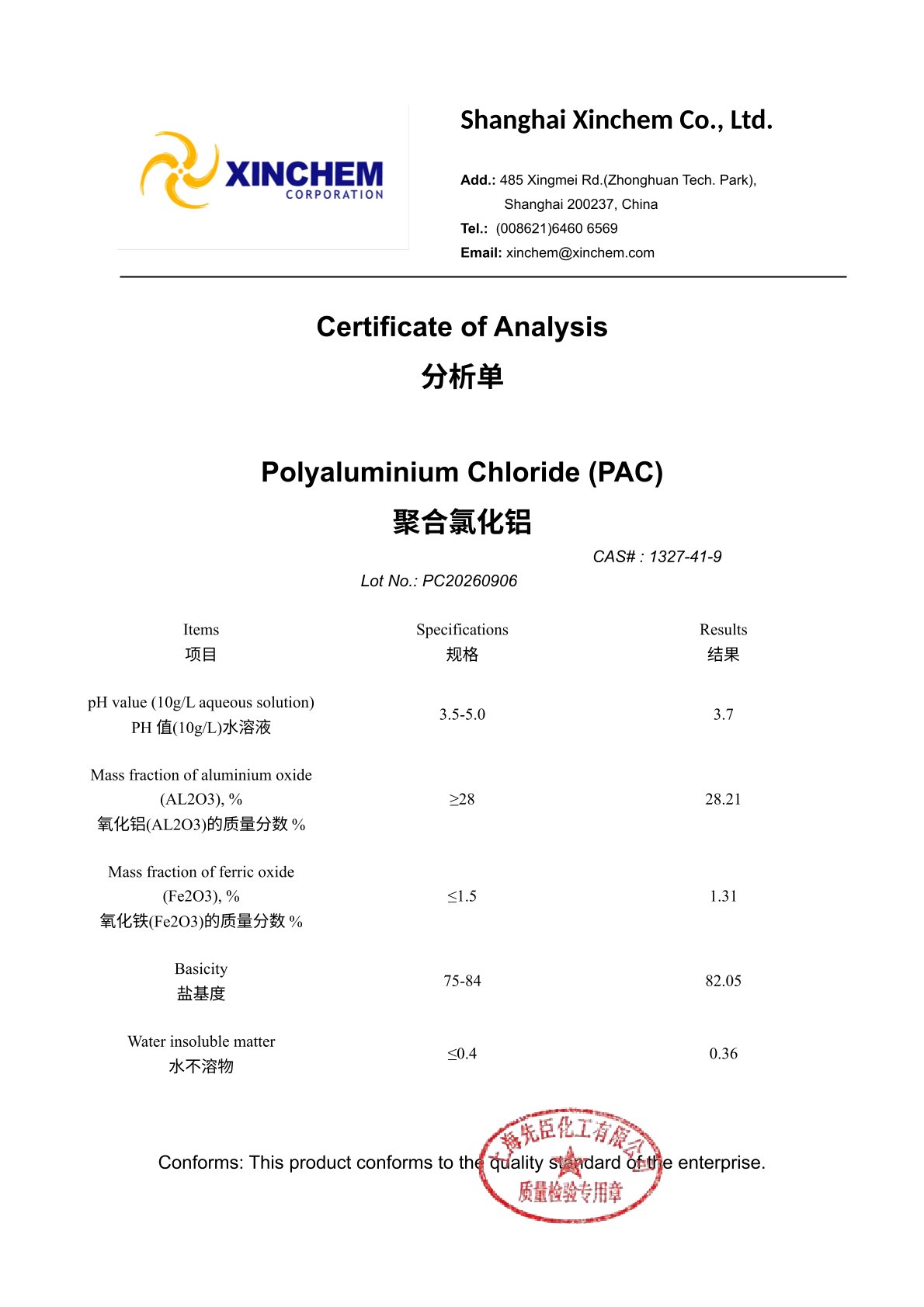


Polyaluminium Chloride (CAS#1327-41-9)
Polyaluminium Chloride (PAC) is an inorganic polymeric coagulant with the general formula [Al₂(OH)ₙCl₆₋ₙ]ₘ, where n typically ranges from 1 to 5 and m represents the degree of polymerization. Unlike simple aluminium salts, PAC contains pre-formed polynuclear aluminium-hydroxy complexes that confer superior coagulation performance. It is supplied as a white to yellowish powder, granular solid, or clear to amber liquid, and is completely soluble in water, forming a gelatinous solution. The pH of a 5% aqueous solution typically falls between 3.0 and 5.0, indicating mild acidity. The basicity and degree of polymerization can be adjusted during manufacturing to tailor the product for specific applications, making PAC a highly versatile coagulant compared with conventional aluminium sulfate or ferric chloride.
Applications
PAC is primarily used as a high-efficiency flocculating agent in drinking water purification and wastewater treatment. In municipal water plants, it removes turbidity, color, suspended solids, organic contaminants, and dissolved impurities, and is effective for the removal of iron, fluoride, cadmium, and radioactive contamination. In industrial wastewater treatment, PAC is widely employed for the clarification of effluents from textile dyeing, papermaking, petrochemical, and food processing operations, facilitating compliance with discharge standards.
Beyond water treatment, PAC serves as a sizing agent in the paper industry and a retention aid in papermaking processes. It is also used in the precision casting industry, in the pharmaceutical and cosmetic sectors (including as an antiperspirant active in cosmetic formulations), in tanning, in the production of catalysts, and in sugar refining and textile processing. Its ability to form a compact, easily filterable sludge reduces downstream disposal costs and improves overall treatment plant throughput.
Preparation Method
Several industrial routes are employed for PAC production, selected according to raw material availability and the desired product grade. The boiling pyrolysis method involves thermal decomposition of crystalline aluminium chloride at approximately 170 °C; the liberated hydrogen chloride is absorbed to produce 20% hydrochloric acid for recovery, and the pyrolysed product is then hydrated with water at above 60 °C for curing and polymerization, followed by solidification, drying, and crushing to yield solid PAC.
The aluminium ash–hydrochloric acid route charges aluminium ash (consisting mainly of alumina and metallic aluminium) into a reactor containing wash water, followed by gradual addition of hydrochloric acid under stirring to conduct a polycondensation reaction. The mixture is aged to a pH of 4.2–4.5 and a relative solution density of approximately 1.2, then settled to obtain liquid PAC; the liquid product may be further diluted, filtered, concentrated, evaporated, and dried to produce solid PAC. More recent processes include the reaction of aluminium hydroxide with hydrochloric acid at 80–110 °C under normal pressure, and production from kaolin via pre-treatment, roasting, acid leaching, filtration, concentration, and polymerization.
Safety Information
PAC is classified as a corrosive substance (Hazard Class 8) and poses a Serious Eye Damage/Eye Irritation Category 1 hazard. Direct contact with the concentrated liquid or dust causes serious eye damage, with symptoms including stinging, tearing, redness, swelling, and blurred vision; permanent eye damage, including blindness, is possible. Skin contact may cause irritation, and prolonged exposure can produce sores or dermatitis; ingestion is very astringent to the mouth, nose, and throat and may damage mucous membranes.
The substance reacts aggressively with galvanized metal, aluminium, copper, zinc, and their alloys, liberating flammable hydrogen gas. PAC is non-flammable but decomposes on heating to release hydrogen chloride, and may become unstable when stored for extended periods above 40 °C. For safe handling, personal protective equipment including safety goggles or a face shield, protective gloves, and protective clothing is required; dust and mist generation should be avoided, and adequate ventilation must be provided. Bulk storage should use rubber-lined, plastic, FRP, or ebonite-coated tanks; unlined metal containers must not be used. Containers should be kept tightly closed in a cool, dry, well-ventilated area away from incompatible materials, and liquid product storage is typically limited to six months. In case of eye contact, flush immediately with plenty of water for at least 15 minutes and seek medical attention without delay.