

Diethyl phthalate (CAS#84-66-2)
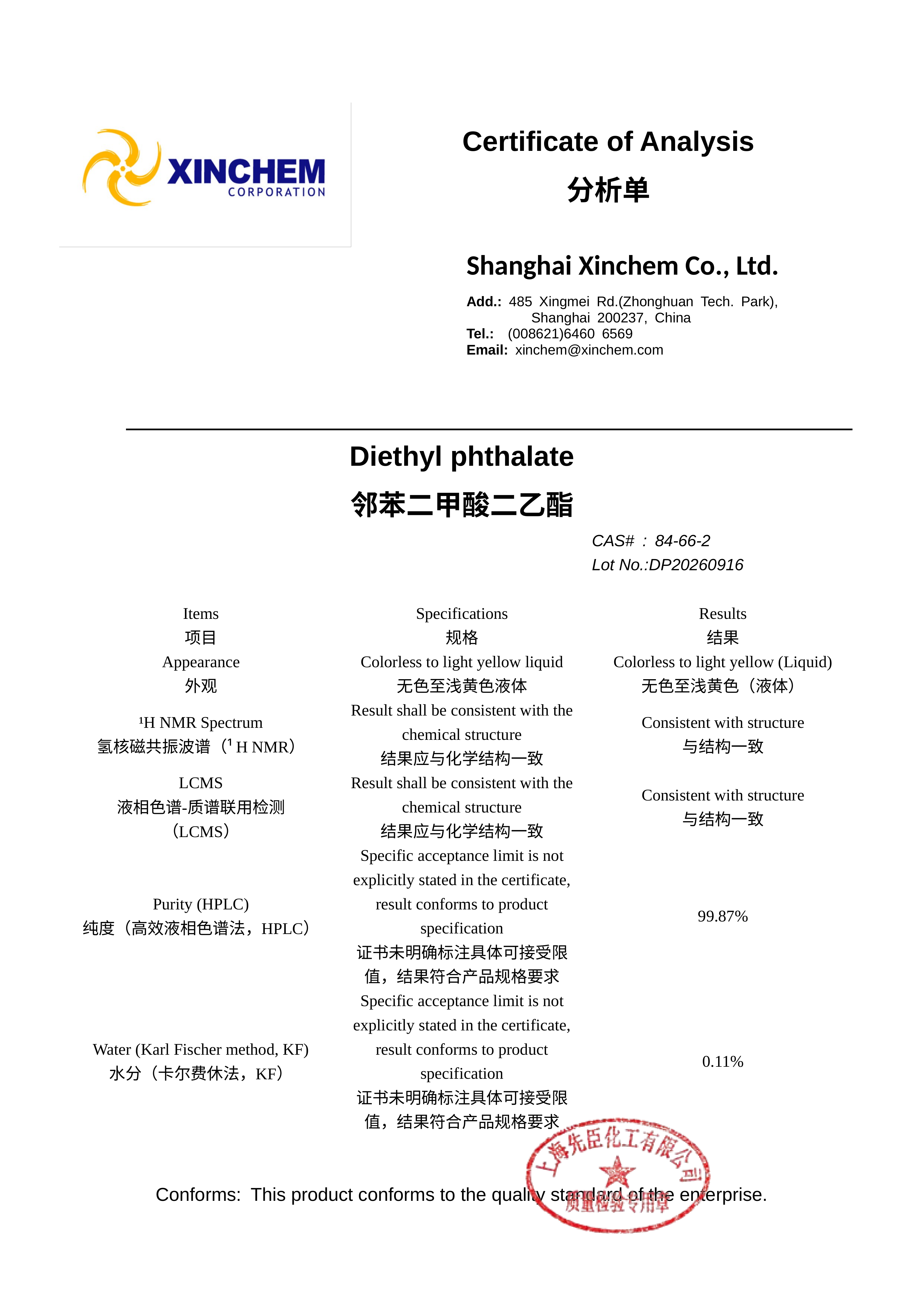
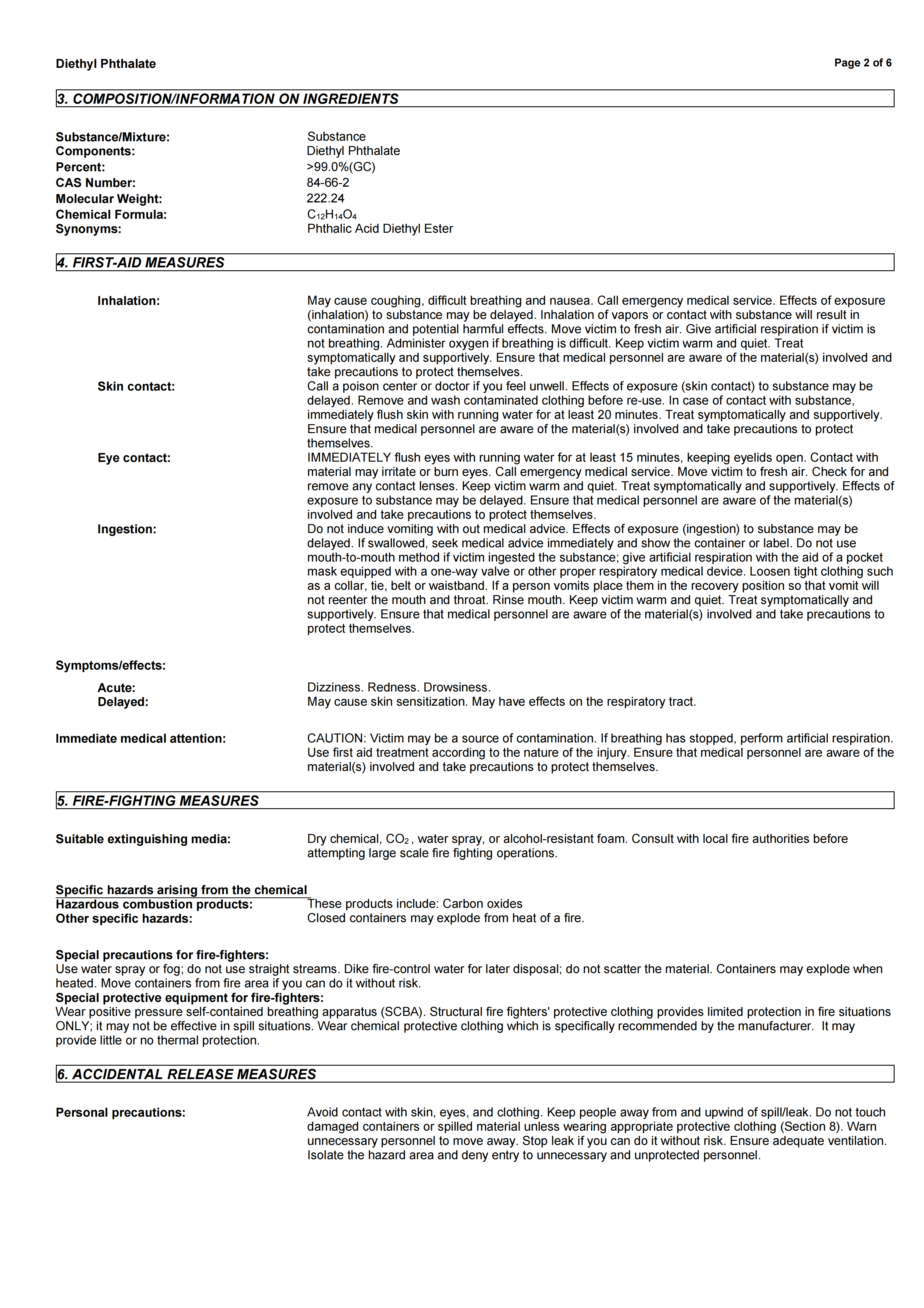
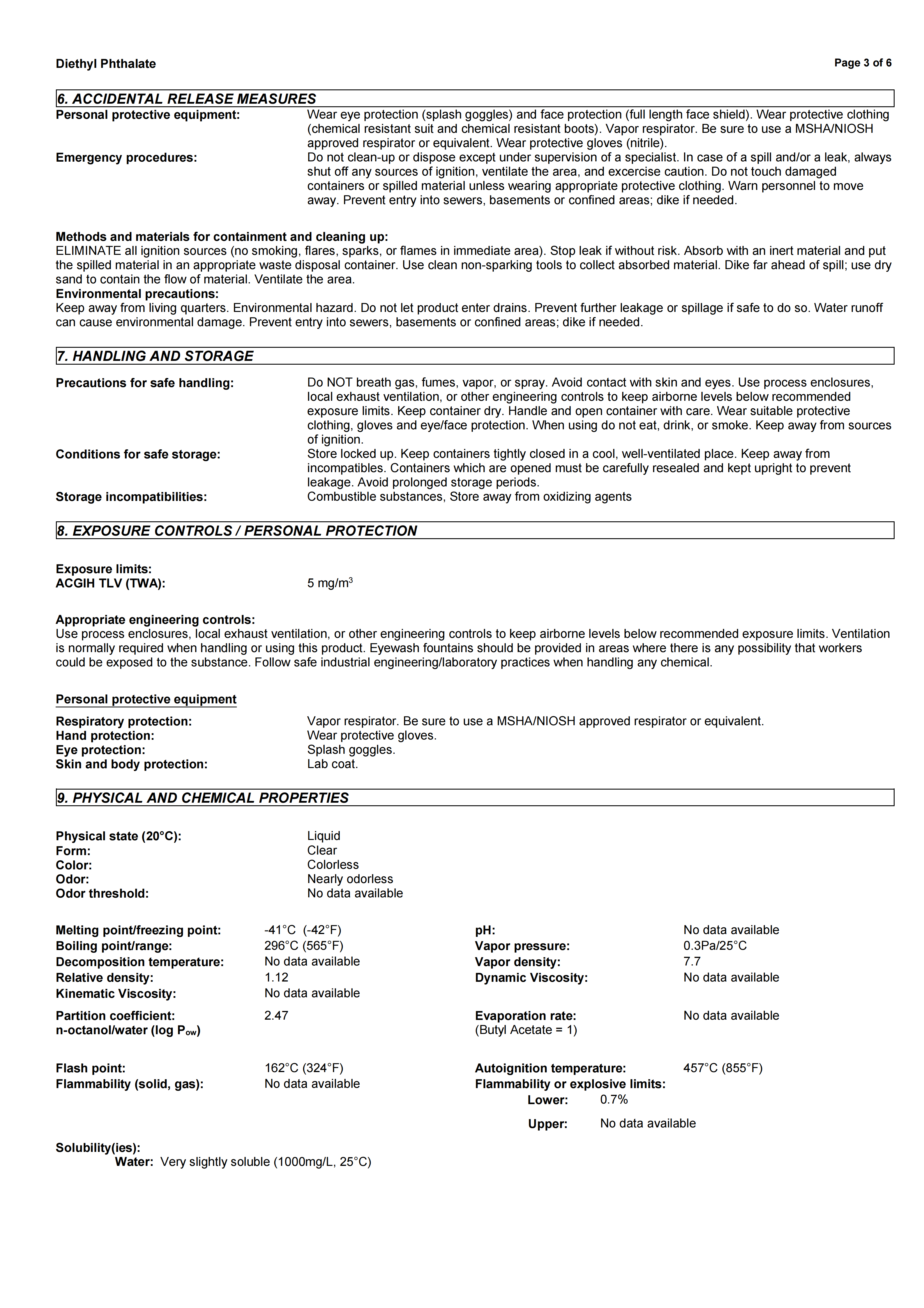
Diethyl phthalate (DEP) is the diethyl ester of phthalic acid, supplied as a colorless to water-white, oily liquid with a very slight aromatic odor. It has a molecular weight of 222.24 g/mol, a boiling point of 296–299 °C at atmospheric pressure, and a specific gravity of approximately 1.12 at 25 °C. DEP is only slightly soluble in water (0.932 g/L at 20 °C) but is miscible with a broad range of organic solvents and exhibits good compatibility with cellulosic and ethylenic resins, conferring flexibility and impact strength in formulated systems. Its flash point falls in the range of 152–170 °C (closed cup) depending on grade, classifying it as a Class IIIB combustible liquid under NFPA criteria; ignition is difficult under ordinary conditions. DEP is chemically stable under normal storage and handling, but it is incompatible with strong oxidizers, strong acids, nitric acid, and permanganates.
Applications
The principal application of Diethyl phthalate is as a plasticizer for cellulosic resins, particularly cellulose acetate and cellulose acetate butyrate. DEP imparts flexibility, softness, and impact strength to cellulosic plastics and is valued for its ability to maintain these properties at low temperatures over extended service life. It is also used as a plasticizer in solid rocket propellants and in the processing of various thermoplastic and elastomeric materials.
A second major use is as a specialty solvent and carrier. DEP serves as a solvent for nitrocellulose and cellulose acetate in lacquers and coatings, and as a solvent or diluent in printing inks, adhesives, and varnishes. In the fragrance and cosmetics industry, DEP is widely employed as an odorless diluent, fixative, and carrier for perfume compounds and cosmetic ingredients; it is a common vehicle for fragrances because it does not alter the olfactory profile of the composition. It also functions as an alcohol denaturant, a wetting agent, and a camphor substitute in cellulose nitrate formulations.
Additional applications include use as a fixative in perfumery, a textile lubricating agent, a dye carrier, and a frothing agent in the flotation of non-ferrous and rare-metal ores; DEP has also been employed as a stationary phase in gas chromatography.
Preparation Method
Diethyl phthalate is produced industrially by the esterification of phthalic anhydride with ethanol in the presence of an acid catalyst. Concentrated sulfuric acid is the classical catalyst, although solid acid catalysts such as phosphoric–boric solid acids, sulfonic acid resins, and Al-, Fe-, or Zn-modified MCM-41 molecular sieves have been investigated to reduce corrosion and simplify purification. In a representative process, phthalic anhydride is charged to a reactor and ethanol is added at a molar ratio of approximately 1.5:1 (ethanol:phthalic anhydride) or higher; the mixture is heated to 120–130 °C with stirring to effect the esterification. Water formed during the reaction is removed continuously to drive the equilibrium toward the diester. Upon completion, the crude product is neutralized, washed, and purified by vacuum distillation to obtain Diethyl phthalate with a purity suitable for plasticizer, solvent, and fragrance applications.
Safety Information
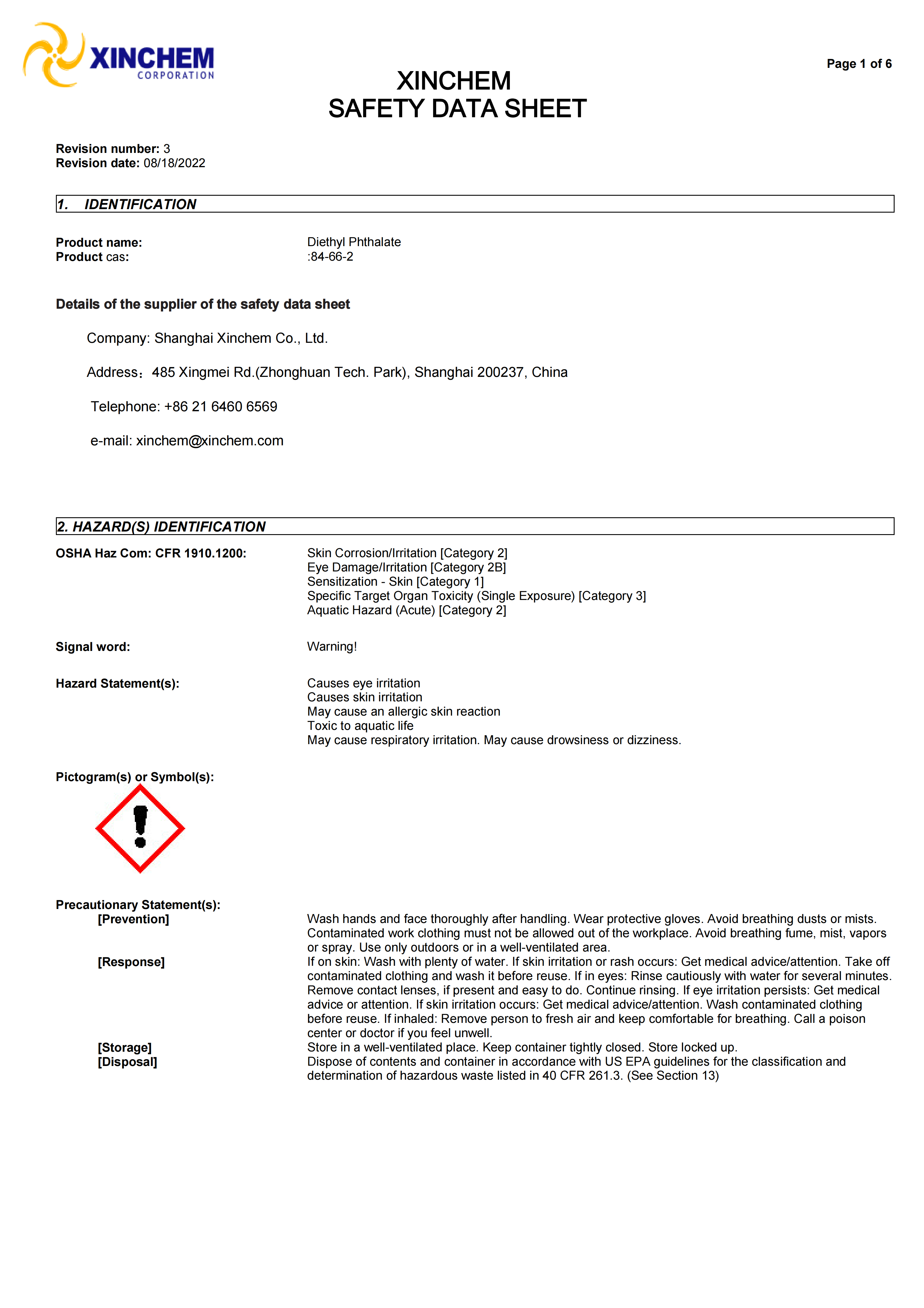
Safety classifications for Diethyl phthalate differ across regulatory frameworks and suppliers, reflecting the compound's relatively low acute toxicity but recognized reproductive and environmental hazards.
Under the EU CLP Regulation (EC No. 1272/2008) , some assessments conclude that DEP does not meet the criteria for classification as a hazardous substance or mixture. In contrast, other GHS-based evaluations assign the following hazard statements: H302 (Harmful if swallowed) , H315 (Causes skin irritation) , H319 (Causes serious eye irritation) , H335 (May cause respiratory irritation) , H361 (Suspected of damaging fertility or the unborn child) , and H402 (Harmful to aquatic life) . Skin sensitization (Category 1, H317) has also been reported in some safety data sheets. The NFPA ratings are Health 1, Fire 1, and Reactivity 0. DEP is not classified as a carcinogen by IARC or EPA, and carcinogenic classifications include TLV-A4 (not classifiable as a human carcinogen) and EPA-D (not classifiable as to human carcinogenicity) .
The occupational exposure limits are consistent across major agencies: NIOSH REL TWA 5 mg/m³, ACGIH TLV TWA 5 mg/m³, and OSHA PEL 5 mg/m³ (8-hour TWA). DEP is not assigned a skin notation by ACGIH, NIOSH, or OSHA, and IDLH is not determined. Target organs identified from animal and human data include the eyes, skin, respiratory system, central nervous system, peripheral nervous system, and reproductive system; repeated high-level exposure in animals has produced reproductive effects and possible polyneuropathy.
For safe handling, avoid inhalation of mists or vapours and prevent contact with eyes and skin. Use local exhaust ventilation or general dilution ventilation to maintain airborne concentrations below the occupational exposure limit. Wear protective gloves, protective clothing, and eye/face protection as appropriate for the handling scale. In case of eye contact, rinse immediately with plenty of water, also under the eyelids, for at least 15 minutes and seek medical attention. For skin contact, wash off immediately with plenty of water for at least 15 minutes. If inhaled, move to fresh air and seek medical attention if symptoms occur. Do not induce vomiting if swallowed; clean the mouth with water and seek medical attention. DEP is combustible; keep away from open flames and other ignition sources, and use water spray, carbon dioxide, dry chemical, or alcohol-resistant foam for firefighting. Store in a well-ventilated, cool area with containers kept tightly closed, and avoid release to the environment in accordance with H402 precautionary statements where applicable.